
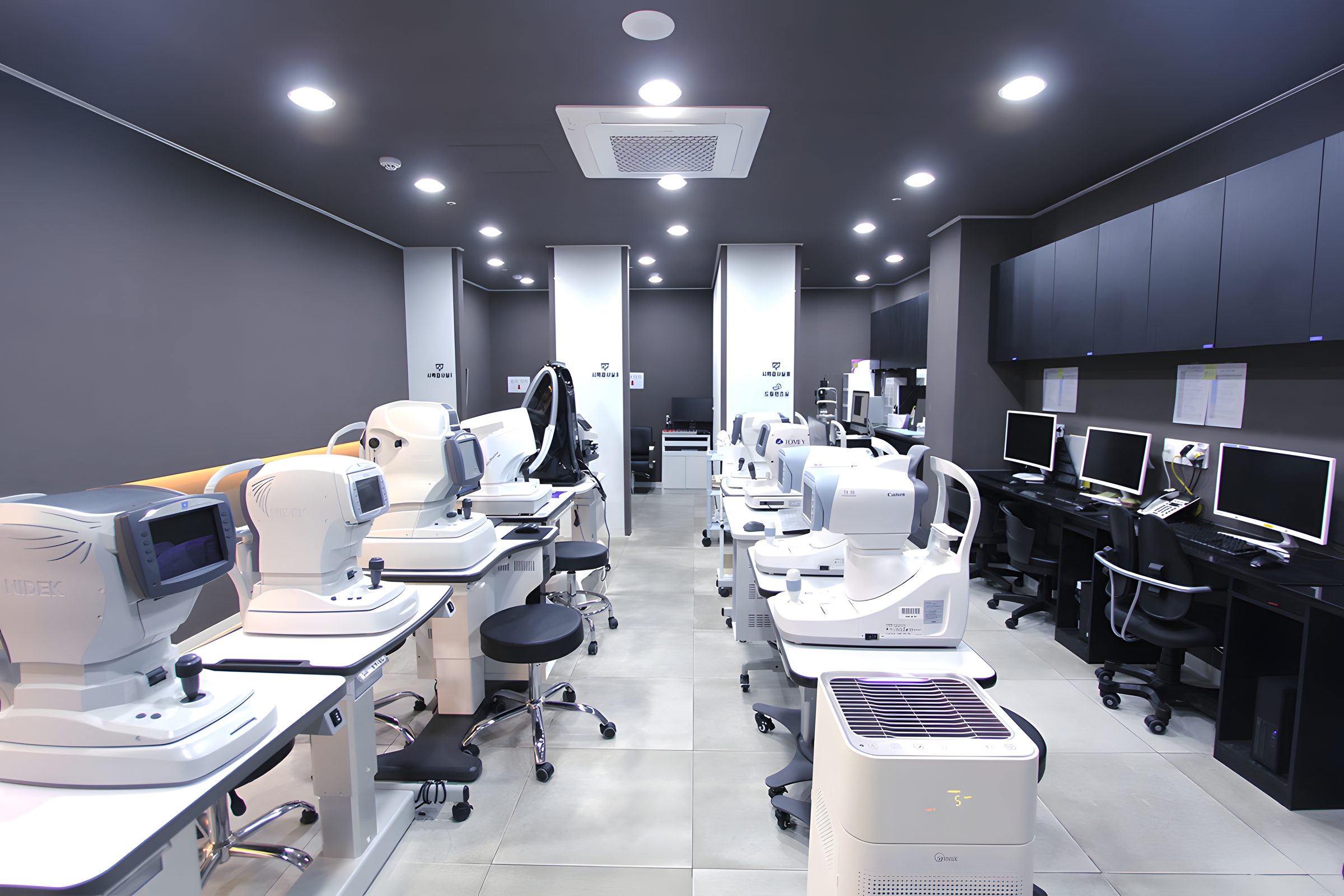


CALLISTO eye
CALLISTO® astigmatism-correcting surgery
Jalboneun Seongmo Eye Clinic CALLISTO® astigmatism-correcting surgery — the CALLISTO® digital marking system identifies the astigmatic axis so cataract and astigmatism are corrected together.
- Home
- Cataract / presbyopia
- CALLISTO® astigmatism-correcting surgery
The three most important points in cataract surgery
Our medical staff at Jalboneun Seongmo Eye Clinic place core value on these three points.
- 01The surgeon's skill and experience
- 02Use of the most advanced equipment currently available at surgery
- 03Use of an intraocular lens with verified postoperative refractive stability
Astigmatism and cataract
Astigmatism means the cornea and lens are not a complete sphere, so light passing through them does not meet at one point on the retina but focuses at several places.
As a result, images may appear to shake, spread, or split into two or three. Because a precise focus cannot be found at near or far, headache can occur and eye fatigue increases.
Especially when cataract is present, uneven refraction of light is worse because of the cataract, so symptoms become more bothersome. Therefore when cataract is present, astigmatism as well as myopia or hyperopia must be corrected to obtain a visual result.
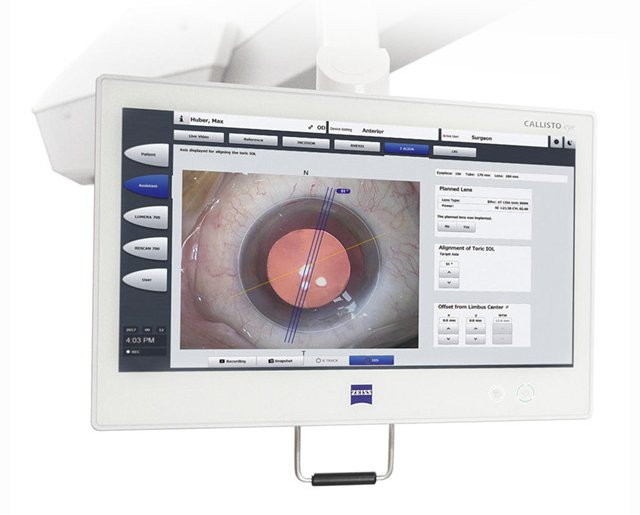
When cataract is accompanied by astigmatism, the precise axis is measured and judged at surgery (using a digital navigation system such as CALLISTO®), then an astigmatism-correcting lens is inserted along the correct axis so both cataract and astigmatism can be corrected.
| Category | Focus |
|---|---|
| Emmetropia | A single focus |
| Astigmatism | Two or more foci |
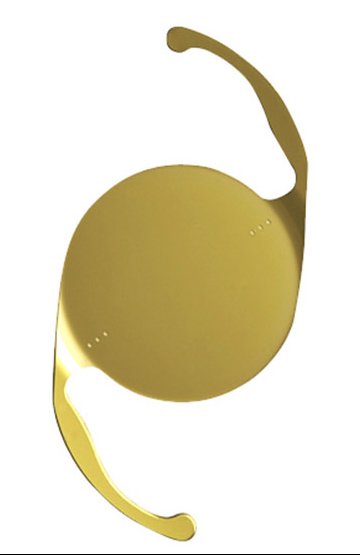
Astigmatism-correcting intraocular lens
An astigmatism-correcting intraocular lens must be made to the patient's exact astigmatic axis and axial length (eye length) and placed on the correct axis, so the surgeon's skill and experience come first.
Head movement and eye rotation always remain variables, so error can occur between the axis measured before surgery and the axis of the lens inserted during surgery. CALLISTO® is a digital marking system that addresses this by recognizing the astigmatic axis digitally and overlaying it like a head-up display during surgery so that error does not occur.
Custom CALLISTO® cataract surgery unique to Incheon Jalboneun Seongmo Eye Clinic
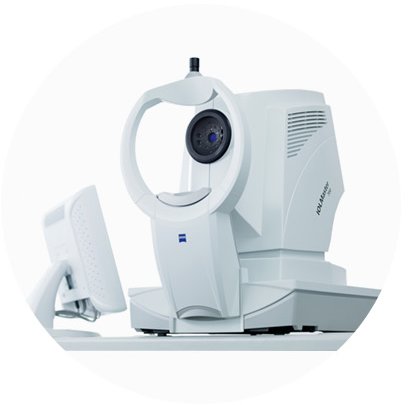
- Axial length and corneal curvature are measured with the Zeiss® IOL Master 700® from Germany, the most advanced axial-length device.
- The Zeiss® CALLISTO® advanced digital marking system is used so AI recognizes the precise astigmatic axis. Three-dimensional measurement is used to measure the degree and direction of astigmatism accurately so a lens suited to the patient can be inserted.
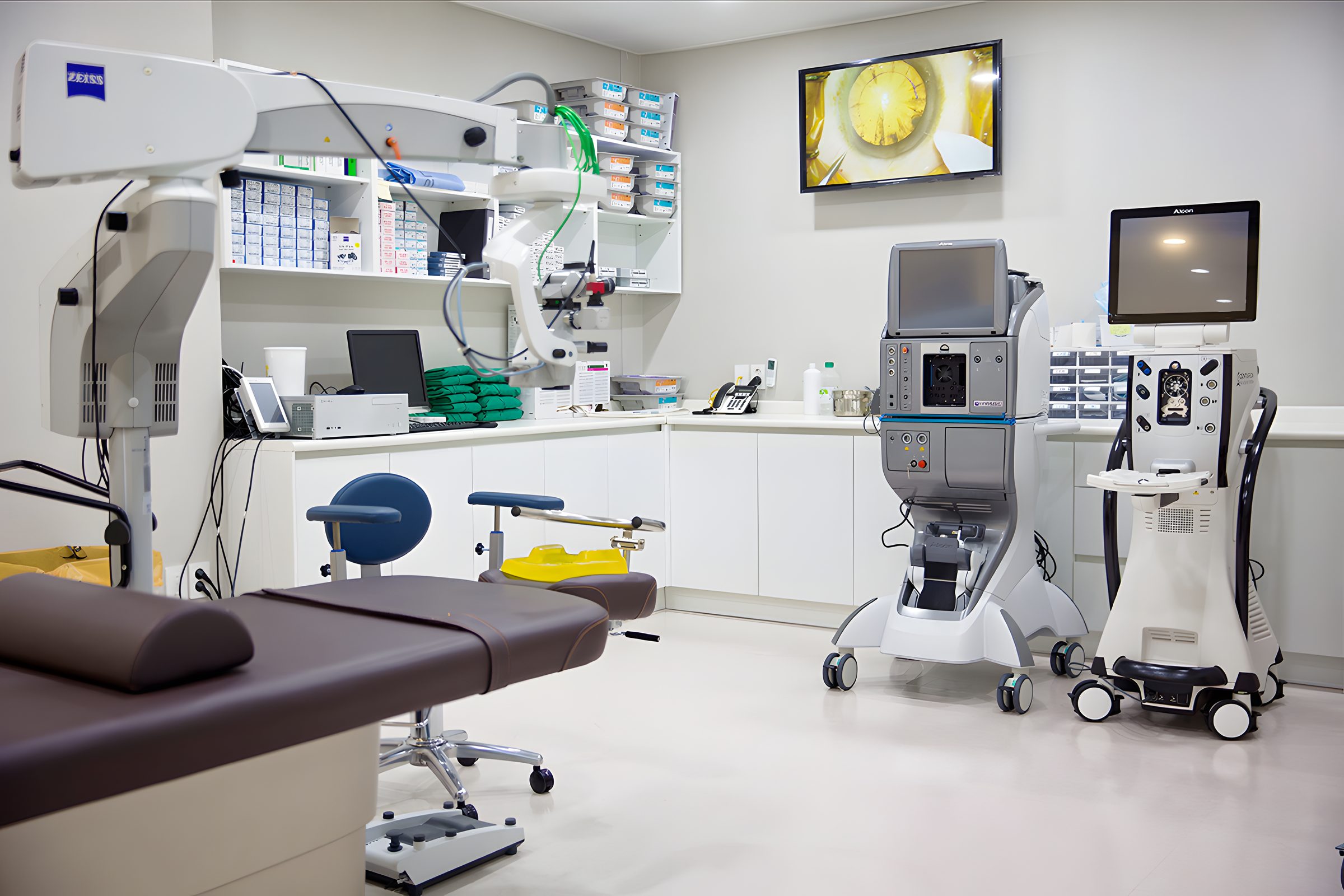
- When the intraocular lens is inserted, Zeiss® Lumera® microscope is linked with CALLISTO® so the lens is placed on the correct axis.
- Any astigmatism-correcting intraocular lens the patient wants can be selected. (Tecnis Eyhance®, Hoya Vivinex®, enVista Toric®, and others)
- There is no step of drawing the astigmatic axis on the eye with a pen before surgery.
- Recovery is prompt. Washing the face and bathing are possible from the day after surgery, and return to daily life is quick.
- STEP 01Zeiss IOL Master 700 (laser axial-length biometer) from Germany
The patient's eye is measured in three dimensions to determine the degree and axis of astigmatism. CALLISTO®, Zeiss's digital marking system from Germany, is used to place the intraocular lens on the precise astigmatic axis.
- STEP 02CALLISTO®, Zeiss's digital marking system from Germany
The intraocular lens is placed on the precise astigmatic axis.
- STEP 03Linked with Zeiss Lumera® microscope from Germany and CALLISTO®
Error that occurs during surgery has been eliminated.
- STEP 04Alcon® Centurion® phacoemulsification from the United States
2.2 mm microincision, sutureless surgery is used so that postoperative results can be achieved safely.