





After prompt diagnosis, intravitreal injection is given without delay.
Intravitreal injection is one non-surgical treatment for retinal disease.
When edema in the retina or marked proliferation of new vessels must be controlled because of diabetic retinopathy, wet macular degeneration, or similar reasons, drug is injected directly into the vitreous cavity.

Antibody injection
When diabetes blocks vessels and oxygen supply to the retina is poor, the retina forms new vessels to supply oxygen.
At that time vascular endothelial growth factor (VEGF) is secreted in excess to make new vessels; it can form vessels but can also damage retinal vessel walls.
Fluid leaks from damaged vessels and the macula swells; if macular edema persists, macular photoreceptors are also damaged and vision declines in a cascade.
Antibody injection introduces a corresponding antibody to suppress this vascular endothelial growth factor, reducing vascular damage and helping macular edema subside.
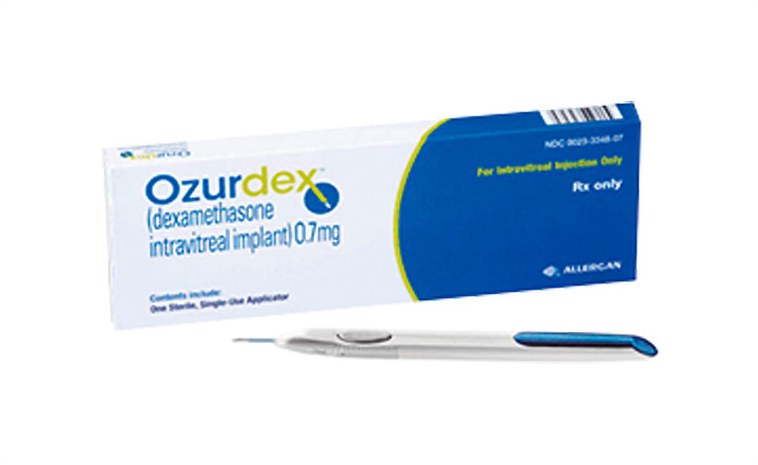
Ozurdex® (dexamethasone) injection effective for macular edema
To stop fluid from leaking out of vessels, the anti-inflammatory effect of steroid is used to suppress several factors that increase vascular permeability.
This reduces vascular permeability and helps macular edema subside.
- 01How it is done
The procedure is performed safely after topical anesthesia.
- 02Care after the procedure
Depending on the condition it is done about 2–3 times at 1-month intervals, and laser treatment may be combined in some cases. Going home is possible right after the injection, and daily life is possible from the next day. As with all treatment, steady care and follow-up are very important.
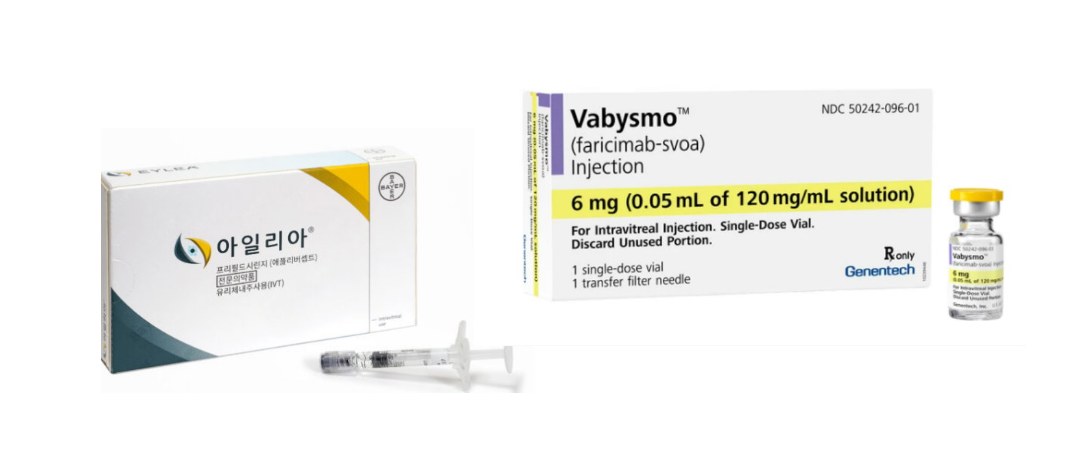
A range of agents is currently available for intravitreal injection.
Intravitreal injection agents include Eylea, Lucentis, Beovu, Vabysmo, Lucen-BS, Amelivu, Avastin, and others.
The drug used varies with disease features, treatment resistance, and how fast the disease progresses, so a specialist's judgment is needed.