I have presbyopia, and now a cataract too? How are they different?

You started wearing reading glasses a few years ago, but lately things look somewhat hazy even with them on. At night, the headlights of oncoming cars may seem unusually dazzling. If a checkup tells you, "You have presbyopia, and a mild cataract as well," you may wonder whether they are the same thing and how they differ.
Presbyopia was covered in our earlier article, The newspaper looks farther away. Are reading glasses all I need?. This time we look at how presbyopia and cataract differ, in this order: symptoms, when both are present, and the exam.
How are presbyopia and cataract different?
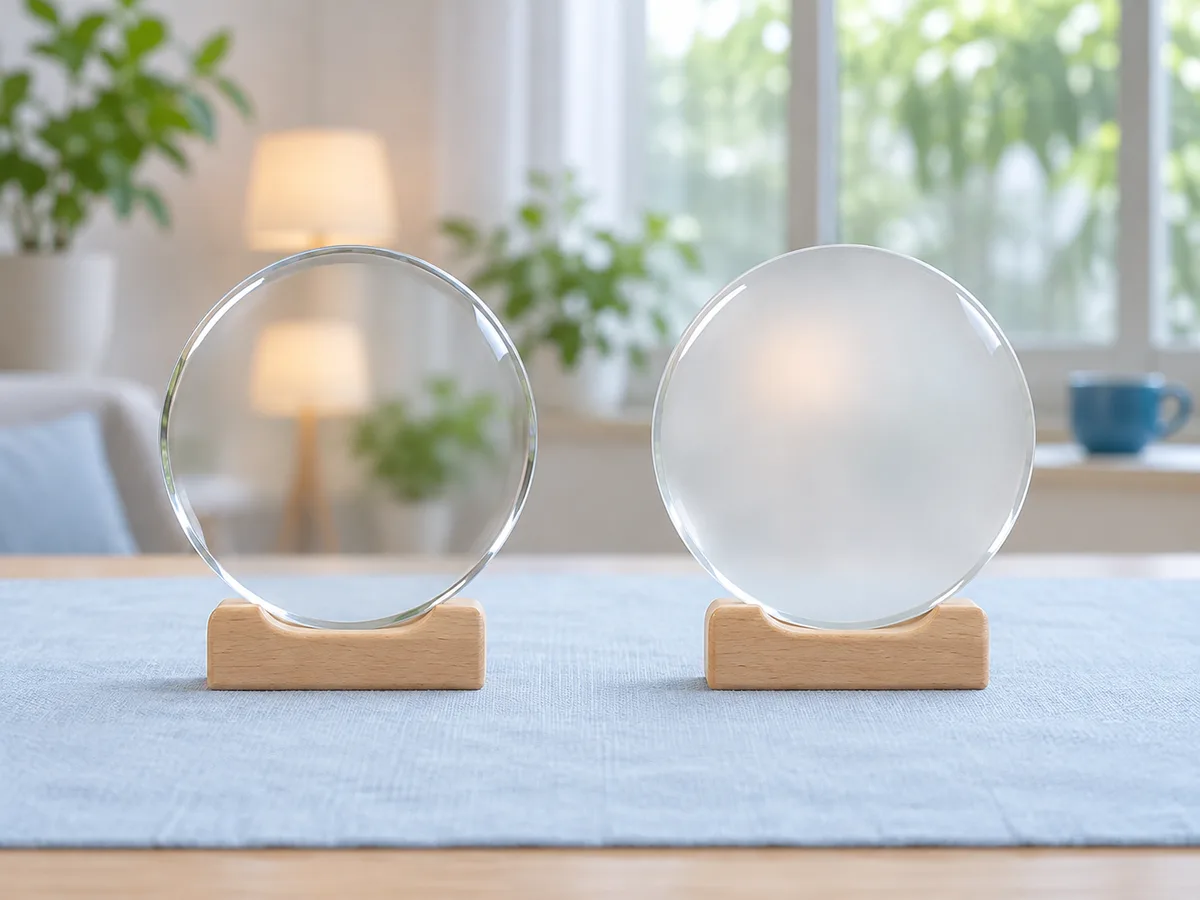
Both are changes in the same lens, but presbyopia is a problem of focusing and a cataract is a problem of clarity.
The lens is the clear structure that sits behind the pupil. It gathers light to form an image on the retina, and when you look at something close, it changes its thickness to refocus.
- Presbyopia: With age the lens hardens and loses its flexibility, so its ability to shift focus to near objects (accommodation) declines. The lens itself may still be clear.
- Cataract: Proteins inside the lens change and clump together, so part of the lens turns cloudy. Because the lens becomes murky, light cannot pass through it to the retina well.
Most people first notice presbyopia in their early to mid-40s, while an age-related cataract becomes cloudier slowly and without pain. Presbyopia is managed with glasses that have plus (convex) lenses. With a cataract, adjusting your glasses or using brighter light can help at first, but surgery is the only treatment that removes the clouded lens.
What clues can symptoms give?
If only small print is blurry, think of presbyopia; if things look hazy at every distance and light is dazzling, consider a cataract as well.
With presbyopia, distant things still look fairly clear, but text in books or on your phone blurs, so you hold it farther and farther away. It is more uncomfortable when you look at small print in dim light, and your eyes tire if you keep looking for a long time.
A cataract can bring changes like these.
- Everything looks hazy: Near and far both look blurred, as if you were looking through a fogged-up window.
- Light spreads: Lamps, sunlight, and the headlights of oncoming cars look too bright, or you see rings of light around them.
- Night is harder: You cannot see well in the dark, so driving at night becomes a strain.
- Colours fade: Colours may look more faded than before.
- Glasses change often: You need to change the power of your glasses more often.
| Item | Presbyopia | Cataract |
|---|---|---|
| Change in the lens | Stiffens, so focusing weakens | Clouds, so light cannot pass through well |
| Distance that blurs | Mainly up close | Both near and far |
| Other symptoms | Eye strain, difficulty in dim light | Glare, halos, faded colours, difficulty at night |
| Effect of glasses | Reading glasses make text clear | Helpful early on, but not enough as it progresses |
This table is only a guide for an educated guess. An early cataract has almost no symptoms, and these symptoms can also come from other eye conditions.
If I can read the newspaper without reading glasses again, has my eyesight improved?
Rather than improving, the power of your eye may have changed because of a cataract.
When a cataract hardens the centre of the lens (the nucleus), the lens bends light more strongly and the eye can shift toward nearsightedness. Close-up text that was hard to read because of presbyopia may then become readable without reading glasses for a while. It may feel like welcome news, but it is a good idea to have the lens checked at an eye clinic.
Can presbyopia and cataract occur together?
Yes. With age it is common to have both changes at once.
As we age, the lens first loses its flexibility and, over time, may also become cloudy. So it is not unusual for someone with presbyopia to develop a cataract as well. The two eyes can also differ, with one eye further along than the other.
When both are present, the two problems overlap, as in "Reading glasses make the print the right size, but it still looks blurry." If a haze remains even after you increase the power of your reading glasses, it is time to check whether the lens has become cloudy.
How does an eye exam tell them apart?
Vision and refraction tests check the focusing problem, and the pupil is widened to look directly at whether the lens is cloudy.
- Vision and refraction tests: After your distance vision is corrected, the test checks whether near vision is reduced and whether adding a plus lens improves it. This is how presbyopia is confirmed.
- Slit-lamp exam: After drops are used to widen the pupil, a microscope magnifies the lens to show where it is cloudy and how much. A cataract is diagnosed with this exam.
- Checking for other conditions: Eye pressure is measured and the retina and optic nerve are examined to make sure nothing else is lowering your vision.
After the pupil is widened, your vision may be blurry and sensitive to light for a few hours, so it is best not to drive yourself that day. Finding a cataract does not mean you need surgery right away. Your eyes are checked regularly while you watch how much daily life is affected, and the timing is decided together with your doctor after weighing the benefits and risks of surgery.
What should I prepare for my visit?
- The glasses and reading glasses you use now If you have changed their power recently, also tell us when. Changes in power are a clue for checking changes in the lens.
- Notes on when it bothers you Write down when things are harder, such as small print, distant objects, night driving, or bright sunlight, and which eye bothers you more.
- Medicines and health conditions Diabetes and long-term use of steroid medicines are linked to cataracts, so it helps to let us know about them.
You can learn about care that looks at presbyopia and cataract together on Presbyopia and cataract surgery, and find our hours and location on Hours and directions. If you have both, the next question may be, "How do presbyopia surgery and cataract surgery differ?" We will look at that in the next article.